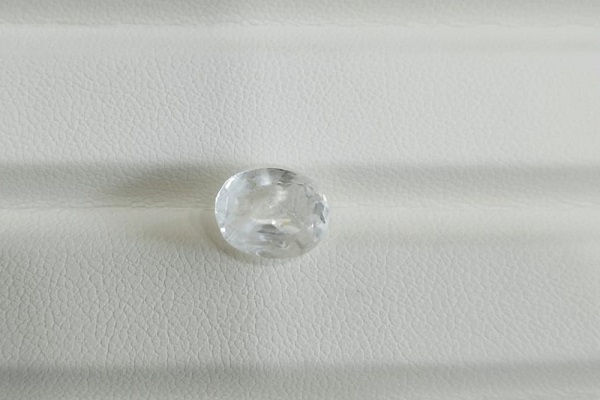
Somebody probably told you to wear Neelam. And then somebody else probably told you Neelam is risky, expensive, and not worth the gamble unless your chart clearly supports it. If you've been stuck between those two opinions, there's a stone that quietly solves this dilemma for a lot of people — Neela Pukhraj, better known outside India as Blue Topaz.
We get asked about this comparison constantly at our Rohini showroom. So let's actually walk through what Neela Pukhraj is, why it exists as an option in the first place, what it should cost you, and where the current market genuinely stands on it.
What Neela Pukhraj Actually Is
Neela Pukhraj is the Hindi name for Blue Topaz, a silicate mineral known for its clear, glassy blue tones — ranging from a pale sky blue to a deeper "London Blue" or "Swiss Blue" shade, depending on treatment. Despite the name similarity, it has nothing to do with Pukhraj (Yellow Sapphire) — the "Pukhraj" here is a colloquial naming convention, not a mineral classification. It's also unrelated to actual Blue Sapphire (Neelam), even though the two get confused constantly by first-time buyers.
In Vedic astrology, Neela Pukhraj is generally treated as a substitute stone for Saturn (Shani) — recommended for people whose chart shows a Saturn connection, but where an astrologer feels the intensity of a full Neelam isn't necessary or advisable. It's also commonly suggested for Aquarius (Kumbh) and Capricorn (Makar) natives in some traditions.
Why This Substitute Approach Exists
Neelam has a well-earned reputation as one of the fastest, most intense gemstones in Vedic astrology — when the match is right, it works quickly; when it's wrong, the effects can be just as fast in the other direction. Not everyone wants to take that risk, and not everyone's finances stretch to a properly certified natural, unheated Neelam either, given how expensive genuine ones have become.
Neela Pukhraj fills that gap. It carries a related, gentler energy — enough for astrologers to recommend it as a trial stone, a budget-conscious alternative, or a permanent choice for people whose Saturn placement doesn't call for anything more intense.
Current Market Snapshot
This part is worth knowing before you shop. India's overall gemstone market is expanding steadily — valued at roughly USD 2.18 billion in 2025, with continued growth projected through 2034 — and one of the clearest shifts researchers are tracking is a jump in demand for certified, traceable stones as buyers become more cautious about fakes and undisclosed treatments.
Blue Topaz sits right in the middle of this shift. It's affordable enough that sellers in the past didn't always bother certifying it, but demand has grown enough — partly through online jewellery platforms making comparison shopping easy — that certified Neela Pukhraj is now the expectation, not the exception, among serious buyers. If a shop today can't produce a lab report for a Blue Topaz they're calling "natural," that's worth questioning.
What Neela Pukhraj Should Actually Cost
Prices vary by size and treatment, but the range is genuinely accessible compared to Neelam:
| Weight Range | Typical Price (Natural, Certified) | Notes |
|---|---|---|
| 3–5 Ratti | ?1,500 – ?2,500 | Common starter size for rings |
| 6–8 Ratti | ?2,500 – ?3,500 | Most commonly recommended weight range |
| 9–10+ Ratti | ?3,500 – ?5,000+ | Larger stones, deeper colour |
For context, this puts Neela Pukhraj at roughly one-tenth to one-twentieth the cost of a comparable-weight natural Neelam — a big part of why it's become such a popular first step for cautious buyers.
Neelam vs. Neela Pukhraj: A Fair Comparison
| Factor | Blue Sapphire (Neelam) | Blue Topaz (Neela Pukhraj) |
|---|---|---|
| Planet | Saturn (Shani) — direct | Saturn (Shani) — substitute |
| Effect Speed | Fast, sometimes within days | Gradual, milder |
| Risk if Mismatched | Can be significant | Generally low |
| Price (per carat, natural) | ?15,000 – ?1,00,000+ | ?1,000 – ?4,000 |
| Best For | Confirmed strong Saturn placement | Trial wear, budget buyers, mild Saturn influence |
Neither is objectively "better" — it genuinely depends on what your chart calls for, which is exactly why we don't recommend skipping the consultation step, even for a lower-cost stone like this one.
How to Buy It Without Getting Fooled
A few practical checks before you pay for any Neela Pukhraj:
- Ask for the treatment disclosure — most commercial Blue Topaz is irradiated and heat-treated to achieve its blue colour (this is standard industry practice and not a red flag by itself), but it should be stated clearly on the certificate.
- Check the setting — traditionally recommended in silver or panchdhatu, worn on the middle finger, similar to Neelam guidance, though this varies by astrologer.
- Confirm it's topaz, not glass or synthetic spinel — cheap blue glass and synthetic stones are common in unregulated markets, especially in loose bead and low-cost ring sales.
- Get the weight matched to your chart, not just picked off a shelf — even a mild stone works better when the weight is right for you specifically.
We carry a certified range on our Blue Topaz (Neela Pukhraj) collection page, and if you're deciding between this and the real thing, our Blue Sapphire (Neelam) collection is worth comparing side by side before you commit either way.
Get the Right Stone, Not Just the Cheaper One
Before buying either stone, it's worth getting an honest read on your chart. Our astrologer at the Rohini office has spent over 20 years telling clients plainly when a milder stone like Neela Pukhraj is enough, and when it genuinely isn't. You can check the details on our astrology consultation page — the office visit is free, and phone consultations for Noida, Gurgaon, and outside Delhi are ?500.
The Takeaway
Neela Pukhraj is a genuinely useful middle ground — real astrological association, real affordability, and far less risk than a mismatched Neelam. But "affordable substitute" still means "buy it properly certified," not "buy it blind because it's cheap." Get your Saturn placement checked, then choose between Neelam and Neela Pukhraj based on what your chart actually needs, not just your budget.
Have you tried Neela Pukhraj as a Neelam alternative? Did your astrologer recommend it, or did you choose it yourself for the price? Let us know in the comments.